



Nebulabio provides SUMO fusion–based protein engineering and production services designed for targets that require improved soluble expression and precise tag removal. By integrating construct architecture, host selection, SUMO protease cleavage design, and downstream purification logic, we deliver proteins in either SUMO-fused or tag-free form with documented analytical evidence. The service is positioned to generate recombinant proteins with defined N-termini and minimized sequence artifacts, supporting structural, biochemical, and interaction-focused research workflows.
☞Nebulabio’s SUMO-tag Protein Production Platform
Our platform supports N-terminal or C-terminal SUMO fusion architectures, configurable secondary affinity tags, and a cleavage workflow based on SUMO protease recognition of SUMO’s folded structure rather than a short linear sequence motif. This design enables tag removal with high junction specificity and facilitates recovery of a target protein with a native-like N-terminus. The platform routes expression to a host system that fits the target’s folding and modification requirements, and then applies a purification sequence that separates the cleaved target from the SUMO tag and SUMO protease with minimal carryover.
| ☎ +86-15801534258 | ✉ info@nebulabio.cn | Contact Us ☜☜ |
☞Supported Options
SUMO Tag and Vector Architectures
• SUMO variants including commonly adopted yeast Smt3 and human SUMO isoforms as configured
• N-terminal or C-terminal fusion designs with optional secondary affinity tags for capture and cleanup
• Junction engineering optimized for Ulp1-mediated cleavage with defined construct documentation
Expression Host Systems
• E. coli routes for rapid and cost-efficient production of SUMO fusions
• Yeast routes for eukaryotic processing and secretion-oriented formats where applicable
• Baculovirus insect cell routes for complex folding environments and multi-domain targets
• Mammalian routes for targets requiring human-like post-translational processing
Purification and Cleavage Options
• Affinity capture using engineered tags and chromatography sequences aligned to target behavior
• On-column or in-solution Ulp1 cleavage formats as configured
• Removal of SUMO tag and SUMO protease through orthogonal affinity or size-based separation
• Final polishing by ion exchange hydrophobic interaction or size exclusion where required
Quality Control and Analytics
• Stage monitoring with SDS PAGE across fusion cleavage and final fractions
• Purity and aggregation assessment using SEC-based methods as configured
• Identity confirmation by mass spectrometry where configured
• Optional N-terminus confirmation for verification of junction-precise cleavage
☞Principle of SUMO-tag Enhanced Protein Production
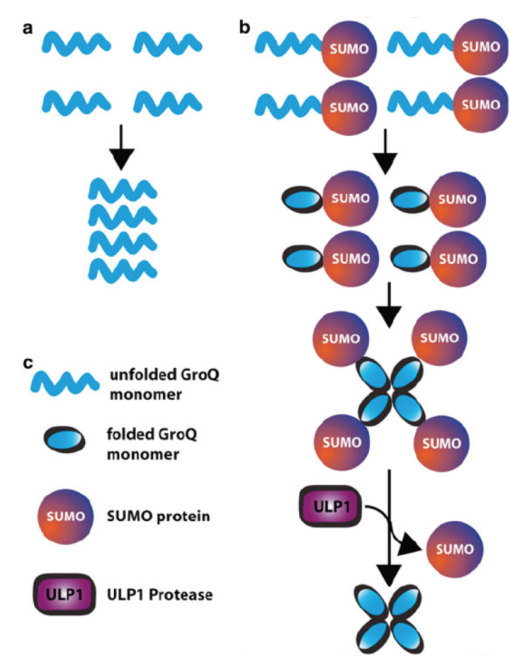
SUMO fusion improves soluble expression primarily by providing a compact, stable folding nucleus that can reduce aggregation propensity and support productive folding trajectories of the fused partner in the host cytosol. A defining feature of the system is cleavage specificity. SUMO proteases such as Ulp1 recognize the three-dimensional structure of the SUMO domain and cleave precisely at the SUMO–target junction. Because recognition depends on SUMO’s folded surface rather than a short peptide sequence, cleavage can be highly specific at the junction and can yield a target protein with a native-like N-terminus without additional residues introduced by common sequence-specific proteases. Subsequent purification separates the cleaved target from the SUMO tag and the protease, resulting in a preparation defined by minimal sequence artifacts and improved suitability for structure- and function-sensitive workflows.
☞Nebulabio Service Workflow

Project Design and Construct Engineering We define a SUMO fusion architecture aligned to the target sequence context and intended final format. Key Steps • Sequence review including domain boundaries and N-terminus requirements • SUMO orientation selection including N-terminal versus C-terminal fusion rationale • Vector architecture definition including promoter selection tag strategy and cleavage design • Gene synthesis or subcloning with sequence verification documentation |
Small-scale Expression and Solubility Screening We assess fusion expression behavior and soluble recovery to define an executable production route. Key Steps • Host introduction aligned to selected system • Small-scale expression evaluation across representative conditions • Soluble fraction assessment and initial enrichment evidence • Selection of route for scale-up based on observed behavior |
Scale-up Production and Fusion Protein Capture We generate fusion protein material at the defined scale and establish an enriched intermediate for cleavage. Key Steps • Scale-up culture or fermentation aligned to host requirements • Harvest and clarification consistent with stability behavior • Primary affinity capture to obtain a cleavage-ready fusion preparation |
SUMO Protease Cleavage and Target Release We perform Ulp1 cleavage to separate SUMO from the target and monitor junction-precise conversion. Key Steps • Cleavage format selection including on-column or in-solution configuration • Execution of cleavage with time-point monitoring and conversion evidence • Preparation of the cleavage mixture for downstream separation |
Tag and Protease Removal with Final Polishing We separate the released target from SUMO and Ulp1 and apply polishing to reach the agreed purity and homogeneity. Key Steps • Orthogonal capture to remove SUMO tag and protease based on engineered handles • Polishing chromatography selection aligned to aggregation and charge behavior • Buffer exchange formulation and concentration definition |
Quality Control Characterization and Delivery We generate the final analytical package and deliver protein aliquots in defined formulation. Deliverables • Tag-free target protein or SUMO-fusion protein in aliquots with specified storage condition • COA including identity purity concentration and configured characterization outputs • Full data package including cleavage verification and chromatography evidence • Handling and storage guidance aligned to stability behavior |
☞Featured Applications of SUMO-tag Protein Production
● Soluble Production of Proteins with Aggregation-prone Behavior
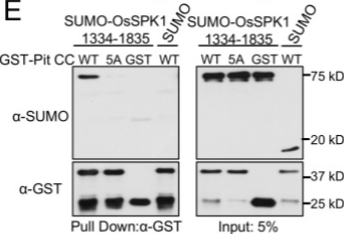
SUMO fusion can shift expression toward soluble accumulation for targets that otherwise partition into insoluble fractions under standard conditions. Junction-precise cleavage then enables recovery of the target without persistent fusion-derived sequence artifacts that can complicate downstream interpretation.
● Enzyme and Kinase Preparations Favoring Tag-free Forms
For enzymes and kinases, persistent fusion sequences can influence activity readouts and interaction behavior in some contexts. SUMO fusion supports soluble production while enabling efficient conversion to tag-free protein for defined biochemical assays.
● Antigen Preparation Minimizing Non-native Tag Sequences
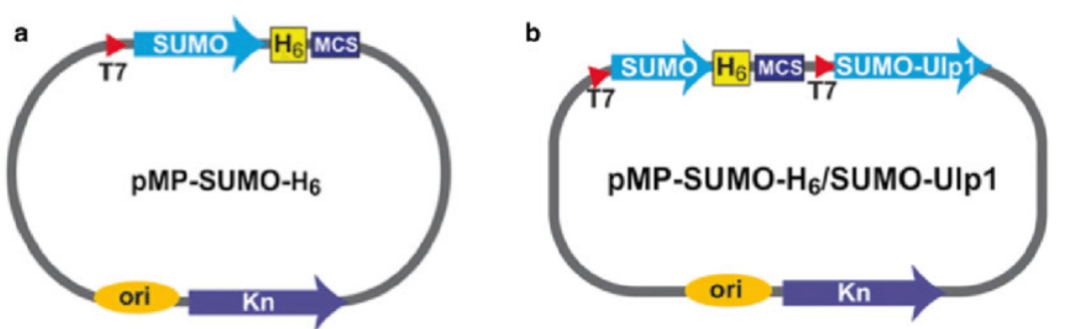
When antigens are intended to represent native epitopes, large foreign tags may introduce off-target immunoreactivity in experimental antibody generation settings. SUMO-enabled production can support removal of fusion components before antigen use, yielding tag-free preparations for epitope-focused workflows.
● Production of SUMO Pathway Components for Biochemical Reconstitution
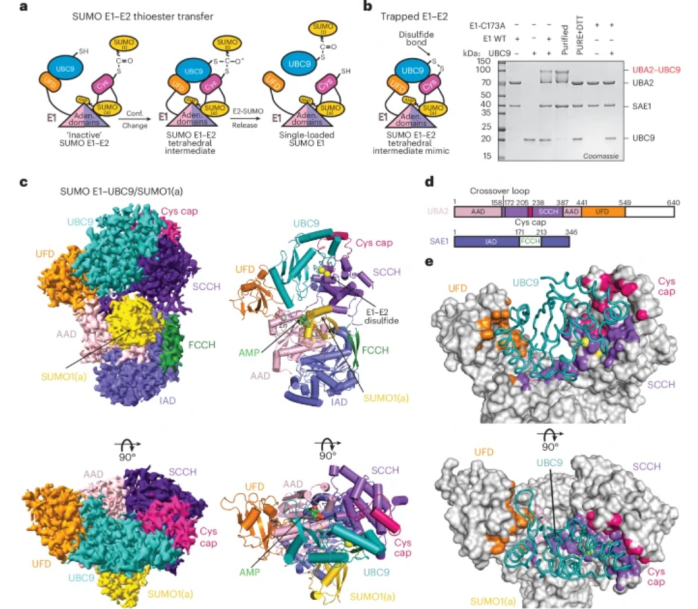
Components of ubiquitin-like modifier pathways are often studied in reconstituted biochemical systems where defined protein boundaries are important. SUMO-enabled production can support preparation of enzymes and substrates with controlled termini and documented identity evidence.
For more information, please contact us at info@nebulabio.cn or +86-15801534258.