


How do stable reporter cell lines convert signaling pathway activity into reliable, quantifiable experimental readouts? This article provides a research-focused overview of the core principles behind stable reporter cell lines, commonly used mammalian host systems (HEK293 and CHO), standard terminology related to gene delivery and selection pressure (lentivirus, puromycin, hygromycin B, Geneticin (G418), blasticidin), and the roles of qPCR, Western blot, flow cytometry, and ELISA in reporter validation. The goal is to establish a structured, assay-oriented understanding of stable reporter cell systems.
1. Core Concept of Stable Reporter Cell Lines
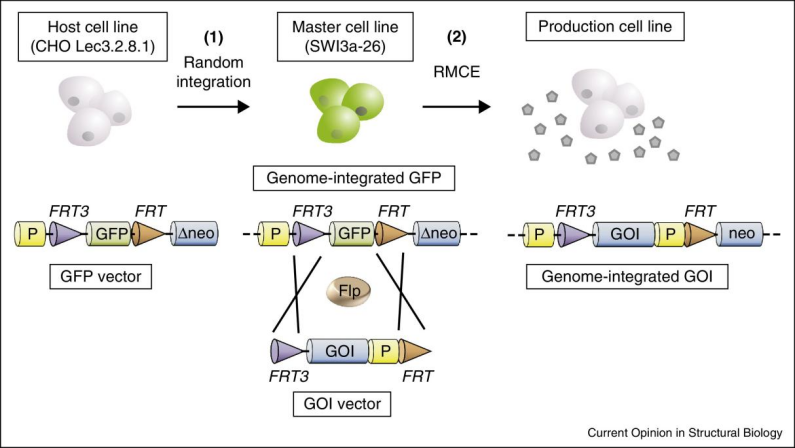
A stable reporter cell line is an engineered mammalian cell system in which a reporter gene cassette is stably integrated into the host genome, enabling continuous and reproducible signal output over extended culture and multiple passages. Unlike transient reporter assays, which rely on short-term, high-copy expression following transfection, stable reporter systems are designed to reflect long-term biological activity under defined stimulation or perturbation conditions.
In research workflows, reporter genes serve as molecular translators. They convert otherwise indirect or complex cellular events—such as transcription factor activation, receptor-mediated signaling, or pathway-level regulation—into measurable outputs such as luminescence or fluorescence. The defining advantage of a stable reporter cell line is that reporter activity becomes a persistent surrogate for upstream biological processes, rather than a temporary artifact influenced by variable transfection efficiency or expression decay.
2. Biological Fit of HEK293 and CHO Host Systems
The choice of host cell line is a central determinant of reporter behavior. Among mammalian systems, HEK293 and CHO cells remain the most widely used platforms for stable reporter cell line development, each offering distinct biological and technical characteristics.
HEK293 cells are highly permissive to gene delivery and responsive to a wide range of regulatory elements. Their human origin supports signaling architectures and regulatory mechanisms that are often closer to physiological human pathways, making HEK293 a common background for transcriptional regulation studies, receptor signaling assays, and pathway dissection experiments.
CHO cells, by contrast, are recognized for their culture robustness and long-term stability. In reporter applications, CHO backgrounds are often favored when population stability, passage-to-passage consistency, or compatibility with long-term experimental designs is prioritized. The selection between HEK293 and CHO is therefore not merely a technical preference, but an alignment between pathway biology, signal behavior, and the intended experimental readout.
3. Gene Delivery, Genomic Integration, and Selection Terminology
The defining feature of a stable reporter cell line is the long-term retention of the reporter expression cassette within the host genome. While non-viral delivery strategies are commonly used, lentivirus-based systems are frequently adopted due to their ability to efficiently transduce a broad range of cell types and support genomic integration, particularly in hard-to-transfect or specialized cellular backgrounds.
Following gene delivery, enrichment of reporter-positive cells relies on selection pressure. This is typically achieved by including an antibiotic resistance marker within the reporter vector and applying selective agents to eliminate non-engineered cells. Commonly used antibiotics include puromycin, Geneticin (G418), hygromycin B, and blasticidin. Puromycin is often associated with rapid selection kinetics, whereas G418 generally requires longer selection periods. Hygromycin B and blasticidin are frequently used in multi-step engineering workflows or in cells with pre-existing resistance backgrounds.
Selection is not intended to maximize stringency indiscriminately, but rather to establish a reporter-positive population that remains physiologically stable while maintaining reproducible signal output.
4. Polyclonal Reporter Pools versus Monoclonal Lines
Effector interactions of feline IgG are determined by Fc structure. Subclass-dependent differences at the CH2/CH3 interface, hinge-proximal flexibility, and glycosylation microenvironment can alter the accessibility and affinity range of Fcγ receptor binding surfaces and influence conformational presentation required for complement recognition (e.g., by C1q). Differences in complement activation can be structurally attributed to whether the Fc region can adopt and present multipoint contact surfaces that satisfy geometric and electrostatic complementarity. FcRn binding is pH-dependent, and its molecular basis relates to the local environment of protonatable residues within the Fc region, which affects binding in endosomal pH conditions and release upon return to near-neutral conditions. These interaction properties should be interpreted in conjunction with subclass-specific constant-region differences to avoid separating effector readouts from structural determinants.
5. Orthogonal Validation of Reporter Signal Properties
Once a stable reporter cell line is established, multi-layer validation is required to define its signal characteristics and ensure reproducibility. At the transcriptional level, quantitative PCR (qPCR) can be used to confirm the presence and stability of reporter gene transcription across passages.
At the protein level, Western blot analysis supports verification of reporter protein size, integrity, and relative abundance, helping to exclude aberrant expression or degradation. At the population level, flow cytometry provides insight into signal distribution, enabling assessment of population uniformity and identification of unstable subpopulations through fluorescence intensity histograms.
For reporter systems involving secreted signals or supernatant-based readouts, ELISA offers quantitative measurement of reporter output under defined conditions. Together, qPCR, Western blot, flow cytometry, and ELISA form an orthogonal validation framework that defines reporter behavior from transcription through protein expression to population-level signal output.
6. Conclusion
Stable reporter cell lines represent a structured cell engineering approach for translating signaling pathway activity into reproducible experimental readouts. Host background selection (HEK293 versus CHO), gene delivery strategy, antibiotic selection pressure, and the choice between polyclonal and monoclonal formats collectively shape reporter behavior and experimental utility. Through orthogonal validation using qPCR, Western blot, flow cytometry, and ELISA, reporter signal properties can be clearly defined and standardized. When these elements are aligned, stable reporter cell lines provide a reliable and traceable experimental foundation for cell-based functional studies and assay development.
| For more information, please contact us at info@nebulabio.cn or +86-15801534258. |