



Overview
Nebulabio specialize in the generation of high-affinity, highly specific monoclonal and polyclonal antibodies derived from Syrian Golden Hamsters (Mesocricetus auratus). As a premier provider of custom antibody services, we offer this niche yet powerful platform to address specific challenges in biomedical research, particularly in immunology, infectious disease, and cancer studies. Hamster immune systems present unique advantages, especially for targets where traditional mouse or rabbit models may be limited due to tolerance or poor immunogenicity. Our service is designed for researchers requiring superior reagents for studying mouse-specific proteins, complex membrane antigens, or pathogens with mouse homologs. Leveraging established hybridoma technology for monoclonal development and optimized immunization protocols for polyclonal production, we provide a complete, end-to-end solution—from antigen design and hamster immunization to hybridoma generation, antibody purification, and comprehensive characterization. Our mission is to deliver robust, reliable hamster-derived antibodies that unlock new research possibilities and enhance the specificity of your critical assays.
☞Introduction to Hamster Derived Antibodies
Antibodies derived from hamsters represent a valuable alternative to those from mice and rabbits, offering distinct immunological benefits rooted in the phylogenetic distance of the hamster from common laboratory rodents.
Overcoming Limitations of Mouse Models: The primary and most significant application is in research involving mouse proteins. Mice often exhibit immunological tolerance to their own (self) proteins, making it difficult to generate high-titer, high-affinity antibodies against mouse antigens. Hamsters, being a phylogenetically distinct species, readily recognize mouse proteins as foreign, mounting a strong immune response. This makes the hamster an ideal host for producing antibodies against mouse cytokines, cell surface markers (like CD antigens), signaling proteins, and other intracellular targets for use in techniques such as neutralization assays, immunohistochemistry on mouse tissues, and in vivo blocking studies.
Superior Response to Complex Antigens: Hamsters are known to generate a robust immune response to a wide variety of immunogens, including viruses, bacteria, and complex membrane proteins (e.g., GPCRs, ion channels). This can lead to the discovery of antibodies against conformational epitopes that might be subdominant or non-immunogenic in other hosts.
Hybridoma Technology Compatibility: The Syrian Golden Hamster is fully compatible with standard murine hybridoma technology. Spleen cells from immunized hamsters can be successfully fused with mouse myeloma cell lines (e.g., SP2/0) to create stable, antibody-producing hybridoma cell lines, enabling the perpetual production of a specific monoclonal antibody.
Antibody Characteristics: Hamster antibodies (particularly IgG) can be used with standard anti-IgG secondary antibodies raised in goat or rabbit against hamster immunoglobulins, ensuring compatibility with common detection systems like ELISA, flow cytometry, and Western blotting.
☞Hamster Derived Antibody Production Process
Nebulabio’s standardized yet flexible process ensures the highest probability of success for both monoclonal and polyclonal antibody generation.
A. For Monoclonal Antibody Discovery (Hybridoma):
Immunogen Preparation & Immunization: The antigen (mouse protein, viral antigen, etc.) is prepared and used to immunize Syrian Golden Hamsters following an optimized schedule. Test bleeds are analyzed to confirm immune response.
Cell Fusion & Hybridoma Generation: Following a final boost, spleen cells from the immunized hamster are harvested and fused with mouse myeloma cells using polyethylene glycol (PEG).
HAT Selection & Cloning: Fused cells are plated in HAT selection medium to eliminate unfused myeloma cells and allow only hybridomas to proliferate. Supernatants from growing hybridomas are screened for antigen-specific antibody production.
Screening & Subcloning: Positive wells are identified via ELISA or other binding assays. Antigen-specific hybridomas are subcloned by limiting dilution to ensure monoclonality and stability.
Expansion & Cryopreservation: The monoclonal hybridoma line is expanded, and a master cell bank is cryopreserved. Antibody is produced in vitro from culture supernatant or in vivo via ascites method (upon request and following strict ethical guidelines).
Antibody Isotyping, Purification & Characterization: The antibody is isotyped, purified (typically via Protein A/G or antigen-affinity), and characterized for affinity and specificity.
B. For Polyclonal Antibody Production:
Immunization Protocol: Multiple hamsters are immunized with the antigen to account for individual immune response variability.
Titer Monitoring: Regular test bleeds are taken to monitor serum antibody titer by ELISA.
Final Bleed & Serum Collection: Once peak titer is reached, a terminal bleed is performed to collect a large volume of antiserum.
Serum Processing & Purification: Serum is separated, filtered, and can be provided as raw antiserum or purified to obtain the IgG fraction.
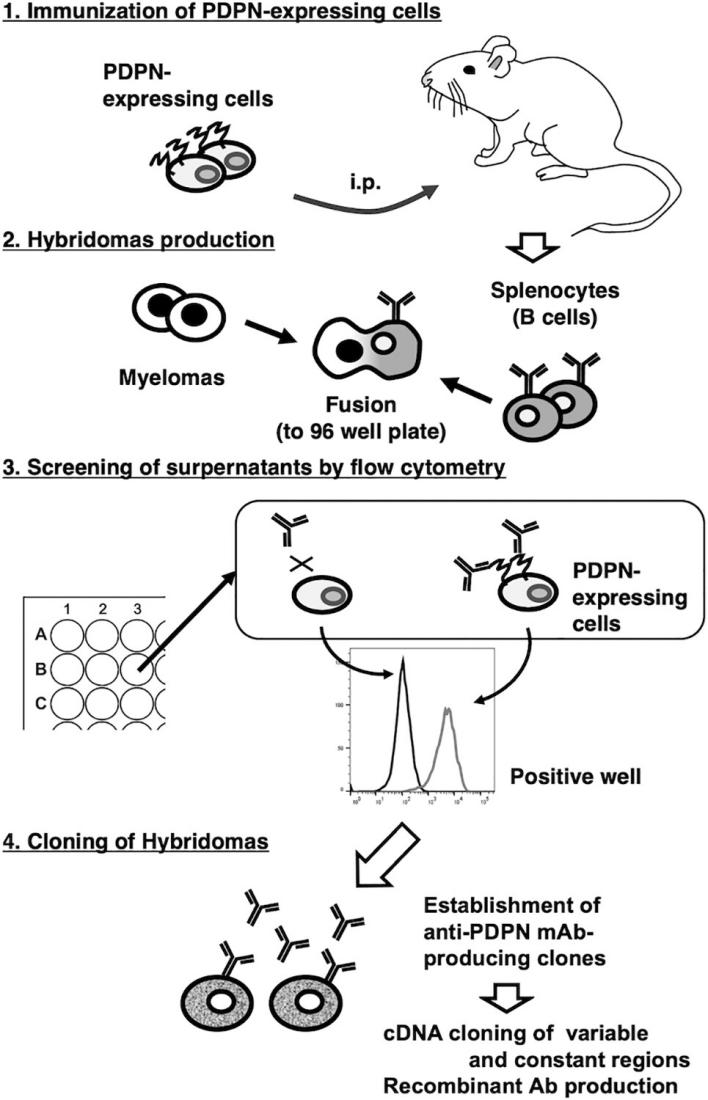
Figure1.Schematic procedure of the CBIS method.
| ☎ +86-15801534258 | ✉ info@nebulabio.cn | Request a Quote ☜ |
☞Nebulabio’s Service Process
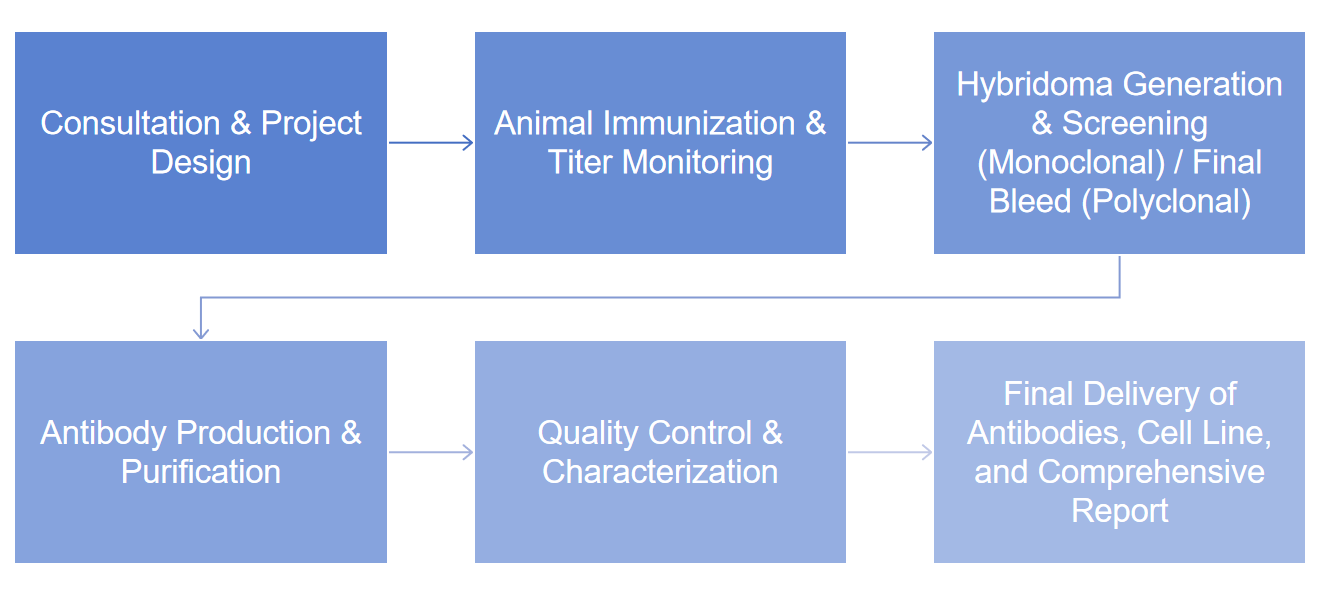
Our service follows a structured, transparent, and collaborative pathway, efficiently transforming your antigen into high-quality, hamster-derived antibodies. The process is divided into four distinct phases, ensuring meticulous management and scientific execution from target design to final delivery.
Phase 1: Project Design and Initiation
This foundational phase focuses on strategic planning. We begin with an in-depth consultation to define your project goals, analyze antigen characteristics, and develop the optimal immunization strategy based on your application needs (e.g., for IHC on mouse tissues, neutralization assays). Together, we decide whether polyclonal antiserum or monoclonal antibody development best suits your objectives. We then finalize a comprehensive project plan, including the immunization protocol, number of animals, and specific deliverable specifications.
Phase 2: Immunization and Screening
This is the core biological phase. Hamsters are immunized according to the approved protocol within our AAALAC-accredited facility. Test bleeds are collected at regular intervals, and serum antibody titers are monitored via ELISA to ensure a robust immune response is achieved. The process then diverges based on the project type:
Polyclonal Path: Once the target titer is reached, a final bleed is performed to collect antibody-rich antiserum.
Monoclonal Path: At the peak of the immune response, spleen cells are harvested and fused with mouse myeloma cells to create a hybridoma pool. The supernatant from this pool is then screened in a high-throughput manner using your antigen to identify wells producing the target antibody.
Phase 3: Production and Characterization
In this phase, candidates are converted into usable antibody reagents.
For Monoclonal Projects: Positive hybridomas are subcloned by limiting dilution to ensure monoclonality, and a master cell bank is established. The chosen clone is then expanded for antibody production, followed by purification via Protein A/G or other affinity chromatography methods.
For Polyclonal Projects: The antiserum is processed, and the IgG fraction can be purified.
Quality Control & Characterization: All purified antibodies undergo mandatory quality assessment, including concentration measurement, purity analysis (SDS-PAGE), specificity verification (e.g., by ELISA or Western Blot), and isotyping for monoclonal antibodies.
Phase 4: Delivery and Support
This is the concluding phase where all final products and data are compiled and delivered to you. Deliverables include: the purified antibody, the hybridoma cell line (for monoclonal projects), and a detailed technical report. The report contains the complete experimental process, all quality control data, and storage recommendations. Our team remains available to provide necessary technical support to ensure the successful application of the antibodies in your research.
☞Advantages of Hamster Derived Antibodies
Ideal for Mouse Protein Targets: The premier solution for generating high-quality antibodies against mouse antigens, overcoming murine immune tolerance. This is indispensable for preclinical research using mouse models.
Broad Antigen Recognition: Hamsters often generate a strong and diverse immune response against challenging antigens like conserved viral proteins, carbohydrates, and membrane proteins, potentially yielding antibodies with unique epitope coverage.
High Affinity Potential: The phylogenetic disparity can lead to a vigorous immune response, resulting in antibodies with potentially higher affinity compared to those generated in mice against similar targets.
Hybridoma Stability: Hamster-mouse hybridomas are generally stable and can be cultured and banked using standard protocols, ensuring a permanent source of the monoclonal antibody.
Complements Existing Reagent Panels: Adds a crucial species dimension to your antibody toolkit, enabling more specific detection and neutralization in complex experimental systems, especially those involving mouse tissues or models.
☞Unlock Specificity with a Unique Immune Perspective
Choose Nebulabio’s Hamster Derived Antibody Service to overcome the limitations of traditional hosts and generate powerful, specific reagents for advanced research, particularly in mouse model systems. Our expertise ensures a streamlined path from antigen to validated antibody.
Contact us today to discuss your target and learn how hamster immunology can provide the solution you need.
| For more information, please contact us at info@nebulabio.cn or +86-15801534258. |