


Overview
Nebulabio is an antibody discovery and engineering team specialized in generating feline-derived monoclonal antibodies for research use, veterinary biologics research, and assay reagent development. By integrating species-specific B cell isolation, single-cell V(D)J sequencing, and recombinant expression in mammalian systems, we deliver fully feline antibody sequences with native heavy–light chain pairing and traceable clonal documentation. The service emphasizes reproducible specificity evidence, configurable Fc subclass selection, and fit-for-purpose analytical characterization to support feline infectious disease research, chronic disease models, and comparative immunology programs.
☞Nebulabio Feline Antibody Platform
Our platform provides direct access to the feline antibody repertoire by isolating single antigen-specific B cells from immunized cats, naturally infected or convalescent donors, or surrogate hosts engineered to carry feline immunoglobulin loci. Feline-optimized antigen probes and multi-parameter sorting enable recovery of rare binders while maintaining cell viability for downstream single-cell workflows. Paired heavy and light chain variable regions are captured at the single-cell level, annotated against feline germline references, and cloned into feline constant-region backbones to preserve species-matched architecture. Recombinant expression is performed in HEK293 or CHO to support appropriate protein folding and Fc glycosylation profiles aligned with feline IgG behavior, with optional format conversion to Fab or scFv when fragment formats are more suitable for specific assays.
☞Supported Options
Sample Types • PBMCs from feline donors (fresh or cryopreserved) • Splenocytes or lymph node cell suspensions from immunized or infected cats • Bone marrow aspirates (project-dependent) • Whole blood (fresh or stabilized for downstream processing) • Mucosal repertoire inputs (project-dependent) | Donor Strategies • Active immunization with defined protein antigens or particles • Convalescent donors following natural infection or controlled challenge models • Naïve repertoire mining from healthy donors • Surrogate hosts engineered for feline Ig loci (project-dependent) | |
Antigen Probes and Labeling • Recombinant proteins prepared in eukaryotic formats when needed • Cell-surface probes using antigen-expressing cell lines • Viral particles or inactivated pathogen-derived probes (project-dependent) • Biotinylated probes paired with fluorescent streptavidin reagents | Feline IgG Subclass and Format Support • Feline IgG subclass selection as configured • Fc engineering options for modulating Fc effector interactions (project-defined) • IgG, Fab, scFv formats with sequence-traceable conversion paths |
☞Principle of Feline-derived Antibody Production
Feline-derived monoclonal antibody generation is built on capturing native adaptive immune responses in cats and preserving the physiological heavy–light chain pairing that underlies antigen specificity. Single antigen-binding B cells are identified using feline-compatible probes and sorting panels, and their paired immunoglobulin variable regions are recovered via single-cell sequencing. These sequences are then expressed on feline constant-region frameworks to maintain species-matched domain architecture and Fc context, which can be important for assay behavior and receptor interaction studies. Recombinant production in mammalian hosts provides consistent assembly and glycosylation suitable for downstream characterization, while clone-level sequence documentation enables traceability, reproducibility, and rational selection of candidates based on binding and biophysical profiles.
| ☎ +86-15801534258 | ✉ info@nebulabio.cn | Request a Quote ☜ |
☞Nebulabio’s Service Process
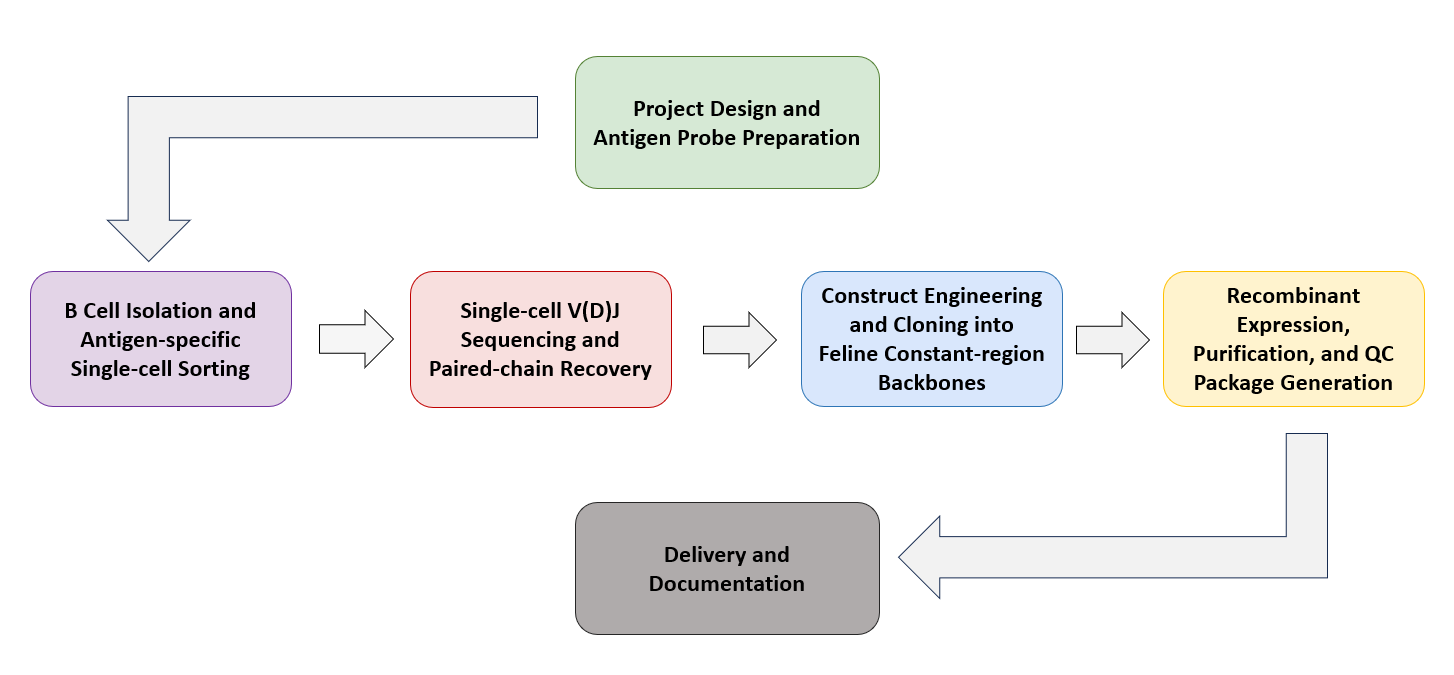
Project Design and Antigen Probe Preparation We define discovery scope, probe format, and downstream assay plan aligned to the biology of the target. Key Steps
|
B Cell Isolation and Antigen-specific Single-cell Sorting We enrich viable B cells and isolate single antigen-binding cells using multi-parameter sorting. Key Steps
|
Single-cell V(D)J Sequencing and Paired-chain Recovery We recover native paired VH and VL sequences and annotate clonotypes against feline references. Key Steps
|
Construct Engineering and Cloning into Feline Constant-region Backbones We clone paired variable regions into feline Ig frameworks with configured subclass and format. Key Steps
|
Recombinant Expression, Purification, and QC Package Generation We express candidate antibodies in mammalian systems and generate a standardized analytical dataset. Key Steps
|
Delivery and Documentation We deliver purified antibodies and full traceability documentation for downstream reproducible use. Deliverables
|
☞Featured Applications
■ Feline Infectious Disease Research and Neutralization Tool Antibodies
Feline-derived monoclonal antibodies can be used as standardized reagents for viral binding and neutralization research workflows when assay systems require species-matched sequences and consistent batch behavior. Clone-level documentation enables longitudinal comparisons across studies, including cross-strain reactivity panels and epitope-focused analyses.
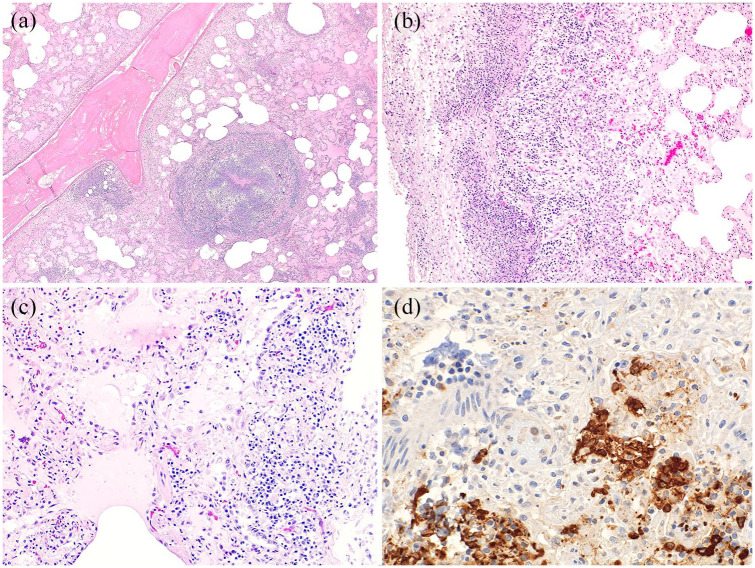
■ Chronic Disease Model Reagents for Target Engagement Studies
In feline chronic disease models, species-matched antibodies are useful as binding reagents to quantify target engagement and pathway modulation in controlled experimental settings. Defined Fc subclass selection helps align assay performance with receptor interaction contexts when Fc-dependent behaviors are being evaluated.
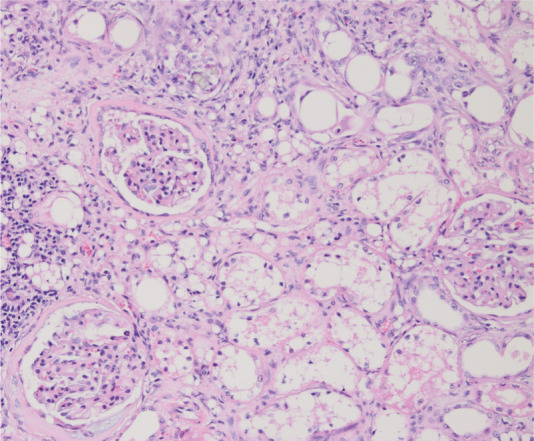
■ Diagnostic Assay Reagent Development for Feline Matrices
Fully feline antibodies can reduce cross-species background effects in feline sample matrices and support consistent capture–detection pair behavior in immunoassay development. Sequence-traceable clones facilitate reagent continuity across iterative assay development cycles.
■ Comparative Immunology and Receptor Interaction Studies
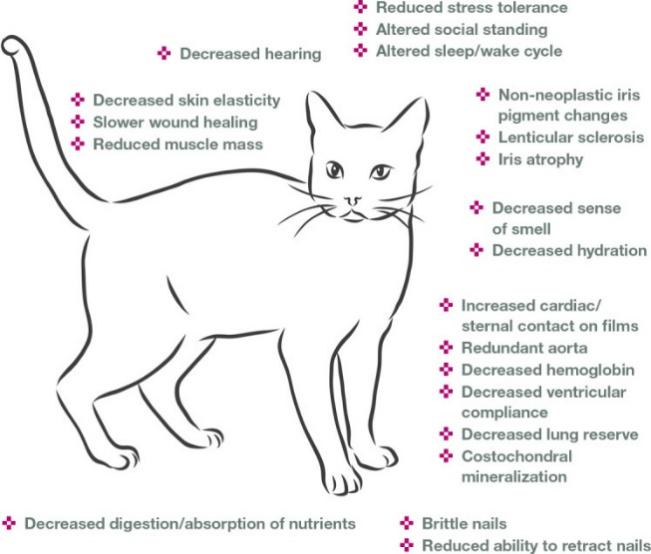
Feline antibodies provide a species-consistent framework for studying Fc receptor interactions, subclass behavior, and immune effector engagement in vitro using feline receptor constructs or feline immune cells. This supports mechanistic interpretation without confounding sequence mismatches from non-feline antibodies.
■ Oncology Target Biology and Antigen Characterization in Feline Programs
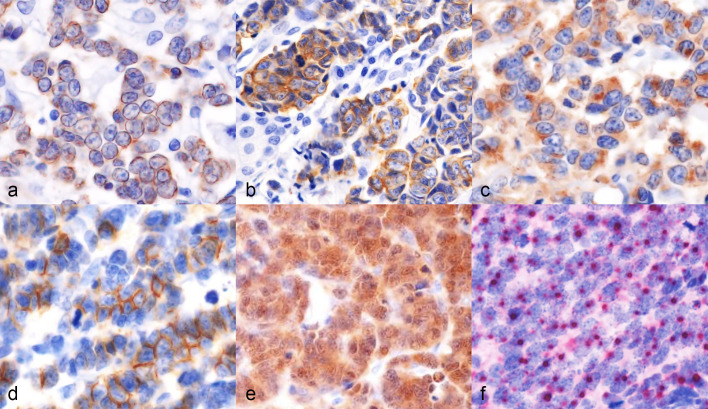
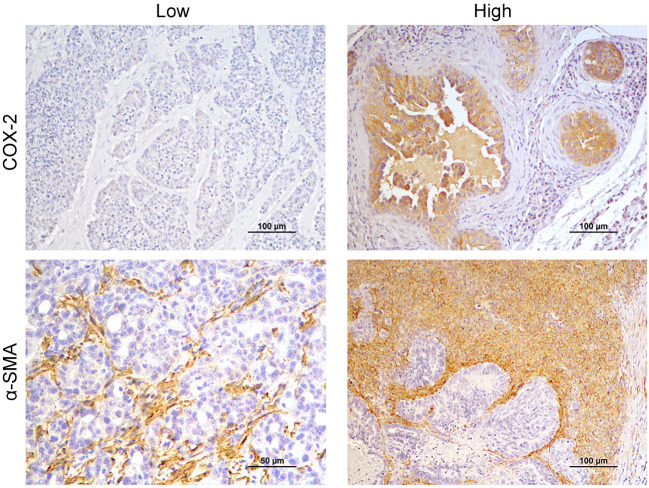
For feline oncology programs, feline-derived monoclonals can serve as well-defined binders for antigen mapping, epitope binning, and cell-surface target characterization in research settings. When paired with flow cytometry and cell-based binding assays, they provide consistent reagents for phenotyping and target distribution analysis.
| For more information, please contact us at info@nebulabio.cn or +86-15801534258. |