


About Us
Nebulabio is a specialized antibody discovery and engineering team focused on generating bovine-derived monoclonal antibodies for veterinary research, agricultural biotechnology, diagnostic assay development, and comparative immunology. By integrating species-specific B cell isolation, single-cell V(D)J sequencing, and recombinant expression workflows, we deliver fully bovine antibodies with native heavy–light chain pairing, configurable IgG subclass selection, and documentation suitable for traceable downstream use. The service is designed to support bovine infectious disease research, food safety monitoring programs, and bovine immunology studies with standardized analytical evidence for specificity and biophysical quality.
☞Our Bovine Antibody Platform
Our platform provides direct access to the bovine antibody repertoire from immunized cattle, naturally infected or convalescent donors, and project-configured surrogate hosts engineered with bovine immunoglobulin loci. Antigen probes are prepared in bovine-compatible formats and can be labeled through biotin–streptavidin or fluorophore strategies to enable multi-parameter flow cytometry gating. Single antigen-binding B cells are isolated at the single-cell level, and paired heavy and light chain variable regions are recovered and annotated against bovine germline references. Candidate sequences are cloned into bovine constant-region backbones and expressed in mammalian systems selected to support bovine-relevant glycosylation and Fc receptor engagement behavior, with optional format conversion to Fab or scFv when fragment formats are preferred for specific assay contexts.
☞Supported Options
Sample Types • PBMCs from bovine donors • Lymph node and splenocyte suspensions from immunized or infected cattle • Bone marrow aspirates (project-dependent) • Milk-derived somatic cells for mammary-associated repertoire mining (project-dependent) • Cryopreserved or fresh whole blood • Bronchoalveolar lavage or mucosal tissue samples (project-dependent) | Immunization and Donor Strategies • Active immunization of purpose-bred cattle with defined antigens • Convalescent donors following natural infection or experimental challenge models • Naïve repertoire mining from healthy animals • Surrogate hosts engineered for bovine immunoglobulin loci (project-dependent) • In vitro priming approaches for low-immunogenicity targets (project-dependent) | |
Antigen Probes and Labeling • Recombinant proteins prepared in bovine- compatible glycoforms when configured • Cell-surface staining using bovine antigen-expressing cell lines • Inactivated bovine pathogens or viral particles (project-dependent) • Biotinylated antigens coupled to fluorescent streptavidin conjugates • Peptide–MHC multimers for TCR-like antibody discovery (project-dependent) | Bovine IgG Subclass and Format Support • Bovine IgG1, IgG2, and other configured isoforms • Isotype-specific secondary reagents for detection and capture • Fc engineering options for effector modulation as project-defined • IgG, Fab, scFv, and bispecific format conversion options (project-dependent) |
☞Principle of Feline-derived Antibody Production
Bovine-derived monoclonal antibody generation captures antigen-driven B cell responses in cattle and preserves native heavy–light chain pairing, which is a major determinant of specificity and affinity. Antigen-binding B cells are identified using bovine-compatible probes and multi-parameter sorting strategies, and paired immunoglobulin variable regions are recovered at the single-cell level through V(D)J sequencing. Candidate VH and VL sequences are then expressed on bovine constant-region frameworks to maintain species-matched domain architecture and Fc context, supporting assay behaviors that depend on bovine IgG subclass properties. Recombinant production in mammalian hosts enables consistent assembly and glycosylation for downstream characterization and controlled functional assessments, while sequence-traceable clone documentation supports reproducibility and candidate selection based on binding, biophysical, and project-defined functional profiles.
| ☎ +86-15801534258 | ✉ info@nebulabio.cn | Request a Quote ☜ |
☞Nebulabio’s Service Process
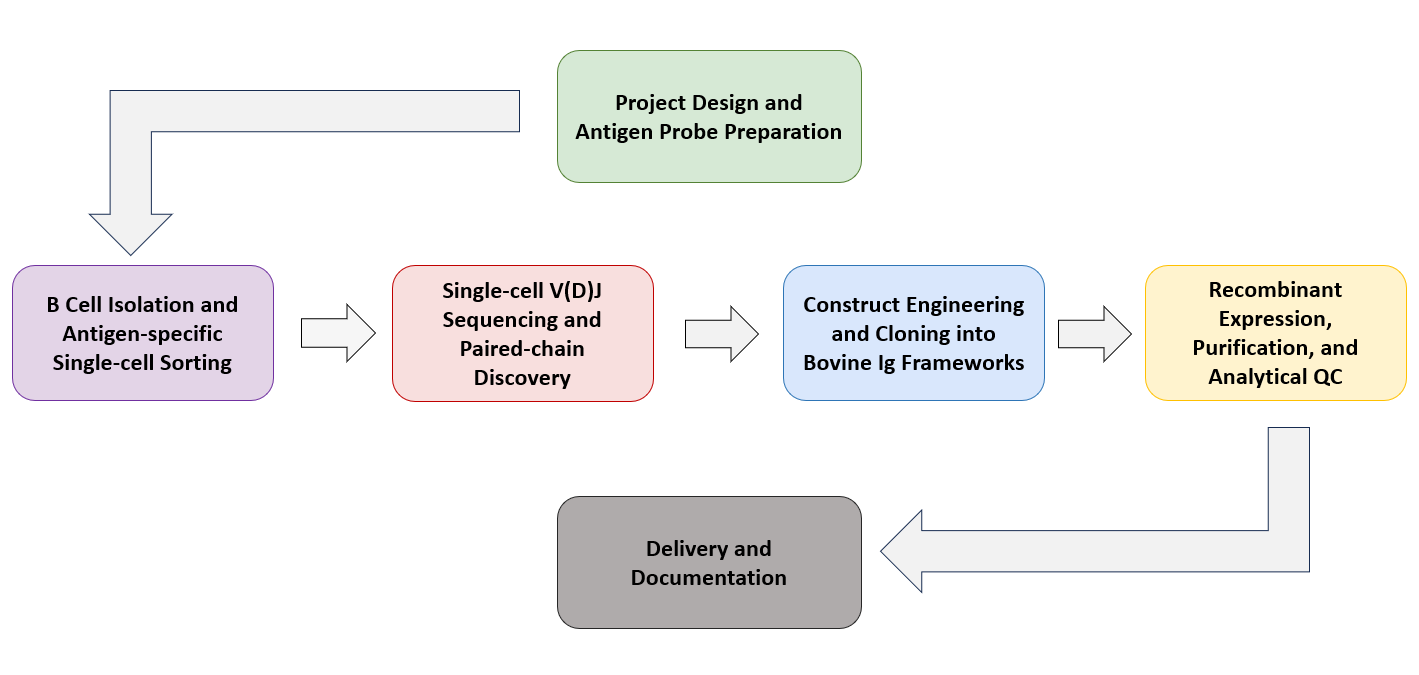
Project Design and Antigen Probe Preparation We define the bovine antibody discovery strategy, configure antigen-probe formats, and establish evaluation assays aligned with the target biology and intended downstream use. Key Steps
|
B Cell Isolation and Antigen-specific Single-cell Sorting We enrich viable bovine B cells and isolate single antigen-binding cells using bovine-optimized staining panels and high-parameter sorting. Key Steps
|
Single-cell V(D)J Sequencing and Paired-chain Recovery We recover paired bovine VH and VL sequences using species-optimized amplification strategies and annotate clonotypes against bovine germline references. Key Steps
|
Construct Engineering and Cloning into Bovine Ig Frameworks We clone native paired sequences into bovine constant-region backbones with configured subclass selection and optional engineering. Key Steps
|
Recombinant Expression, Purification, and Analytical QC We express bovine monoclonal antibodies in mammalian systems and generate a standardized analytical dataset supporting purity, identity, and binding. Key Steps
|
Delivery and Documentation We deliver purified antibodies and complete documentation for traceability and reproducible downstream use. Deliverables
|
☞Featured Applications
■ Bovine Infectious Disease Research Reagents
Bovine-derived monoclonal antibodies provide standardized binders for antigen mapping and neutralization research workflows in cattle-relevant assay systems. Sequence-traceable clones support comparative studies across strains and longitudinal sampling designs, enabling consistent reagent use across research phases.
■ Mastitis-associated Target and Pathogen Studies
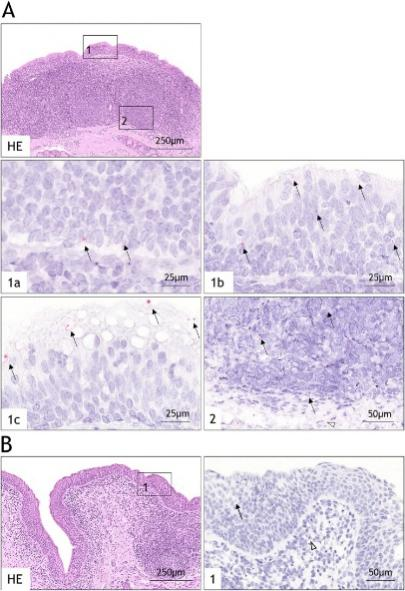
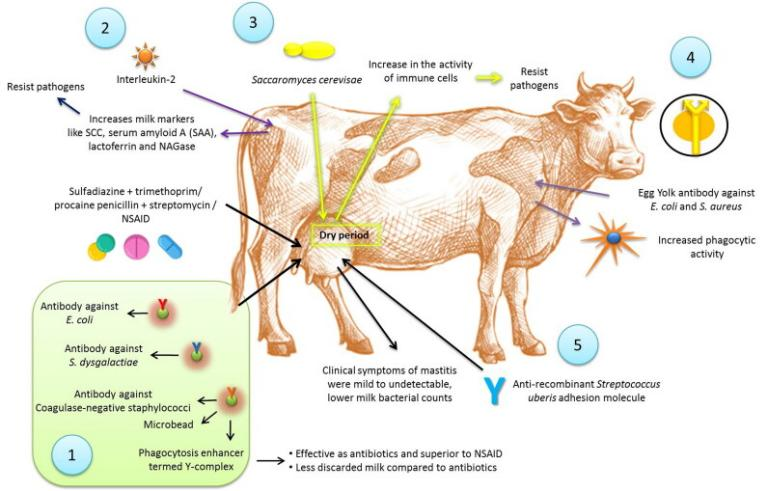
In udder health research, bovine antibodies can be configured as binding reagents for milk-matrix compatible assays and for mechanistic studies involving mastitis-associated pathogens or host targets. Their species-matched constant regions can be useful when Fc-dependent behaviors are part of the experimental interpretation.
■ Food Safety Monitoring Assay Reagents
Bovine antibodies can serve as capture and detection reagents for immunoassays targeting zoonotic pathogens or contaminant markers in beef and dairy production chains. Clone-level sequence documentation supports reagent continuity and lot-to-lot consistency across monitoring programs and method validation cycles.
■ Vaccine Immunology and Correlate Studies
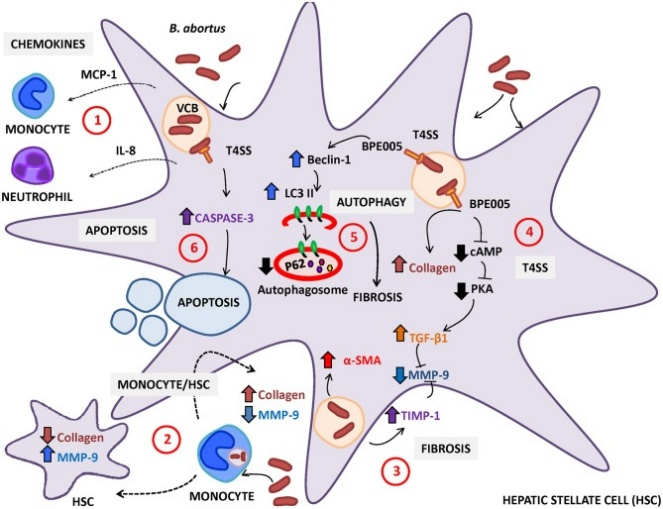
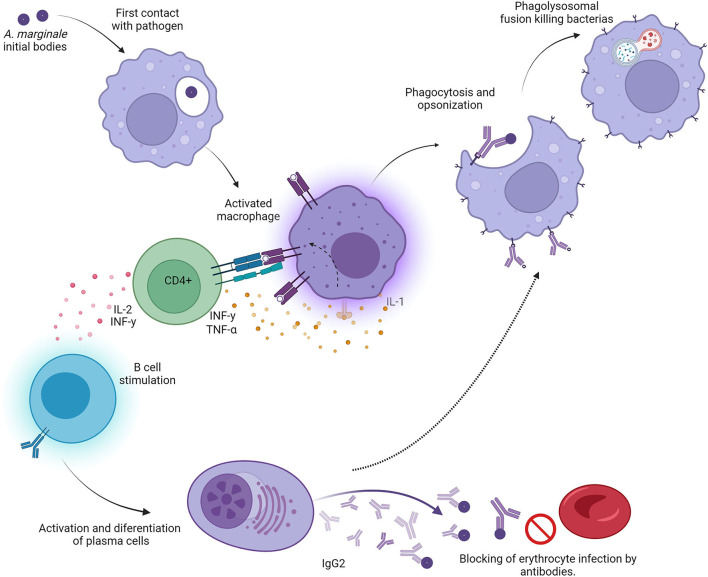
Monoclonals isolated from vaccinated or challenged cattle can be used as reference reagents for serological assay calibration, epitope-focused studies, and comparative binding panels. This supports consistent interpretation across different cohorts when standardized positive controls are needed.
■ Comparative Immunology and Fc Interaction Research
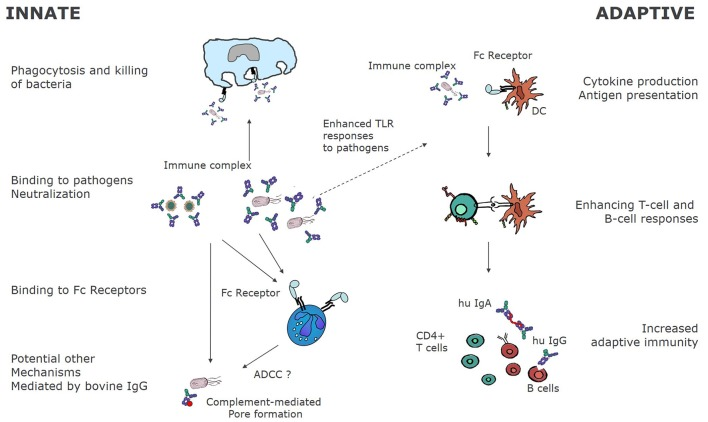
Bovine antibodies are useful tools for studying bovine IgG subclass behavior and Fc receptor interaction contexts in vitro using bovine immune cells or receptor constructs. Such reagents support mechanistic studies without introducing sequence mismatches from non-bovine frameworks.
| For more information, please contact us at info@nebulabio.cn or +86-15801534258. |