


About Us
Nebulabio is a leading global provider of custom antibody development services, with a distinguished reputation built over 20 years in the field of immunology and production science. Our Custom Polyclonal Antibodies Service offers researchers and developers a powerful, cost-effective solution for generating high-titer, high-affinity antisera against a diverse range of antigens. We specialize in transforming your specific immunogen—be it a recombinant protein, synthetic peptide, small molecule hapten, or even whole cells—into a potent, multi-epitope recognition tool. Our expert team manages the entire process, from strategic immunogen design and ethical host animal immunization to large-scale serum collection, purification, and comprehensive quality control. We are committed to providing a fully customized, collaborative service that delivers a reliable, high-performance reagent tailored to your unique experimental needs.
☞What Are Polyclonal Antibodies?
Polyclonal antibodies (pAbs) are a heterogeneous mixture of immunoglobulin molecules secreted by a multitude of different B-cell clones within an immunized host. Unlike a monoclonal antibody which recognizes a single, specific epitope on an antigen, a polyclonal antiserum contains a diverse population of antibodies that bind to multiple different epitopes across the antigen's surface.
This fundamental difference grants polyclonal antibodies several key advantages:
High Affinity & Signal Amplification: The combined effect of many antibodies binding to multiple sites on a single target antigen results in a strong, amplified signal, making pAbs exceptionally sensitive in detection-based assays.
Robustness & Tolerance to Antigen Variation: Because they recognize multiple epitopes, pAbs are more tolerant of minor changes in the antigen's structure, such as slight denaturation, polymorphism, or variations in post-translational modifications. They often continue to bind effectively even if one epitope is altered.
Excellent for Capturing/Precipitating Native Proteins: The ability to form large immune complexes via multi-epitope binding makes polyclonal antibodies ideal for techniques that require antigen capture or precipitation, such as immunoprecipitation (IP) or chromatin IP (ChIP).
Cost-Effective & Rapid Production: The development timeline is typically shorter and more cost-effective than monoclonal antibody development, providing a quicker route to a usable reagent, especially for novel targets.
Nebulabio’s service is designed to harness these advantages by producing bespoke polyclonal antisera optimized for your specific application, whether it's Western blotting, immunohistochemistry, ELISA, or functional assays.
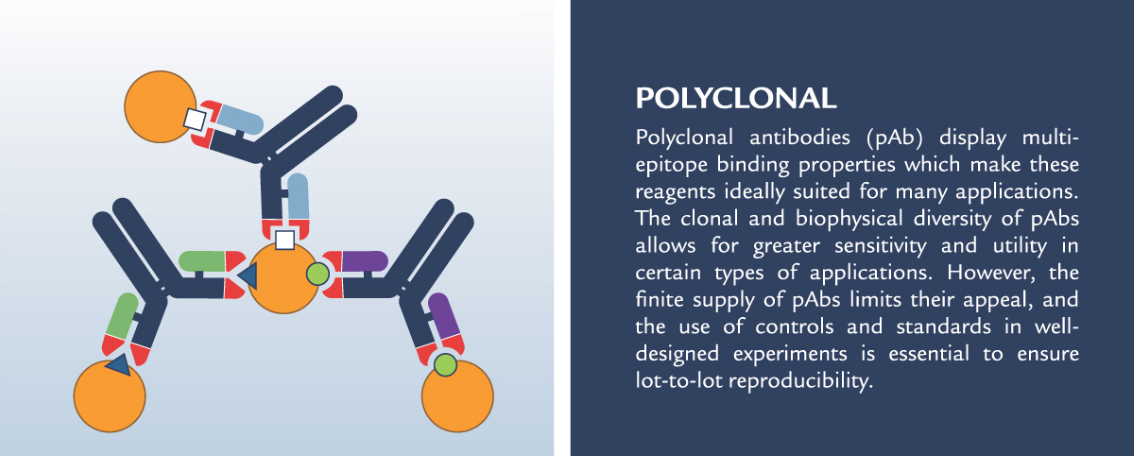
Figure1.The image shows the structure of a polyclonal antibody.
☞Polyclonal Antibody Development Process
Our production process is a carefully orchestrated sequence designed to maximize immune response, ensure animal welfare, and deliver a product of consistent high quality.
Phase 1: Project Design & Immunogen Preparation
Consultation & Strategy: We work with you to design the optimal immunogen. For peptides or haptens, we advise on carrier protein conjugation (KLH, BSA) and peptide design to maximize immunogenicity.
Immunogen Formulation: Your antigen is professionally formulated with our selection of adjuvants (e.g., Freund's, Titermax, aluminum-based) designed to stimulate a strong and sustained humoral immune response.
Phase 2: Host Animal Immunization & Boosting
Ethical Animal Selection & Care: We utilize our AAALAC-accredited facility. The host species (rabbit, goat, sheep, chicken, etc.) is selected based on antigen homology and required serum volume. All procedures adhere to strict ethical guidelines.
Custom Immunization Protocol: Animals receive a primary immunization followed by a series of booster injections according to a customized schedule, typically spanning 8-12 weeks.
Serum Titer Monitoring: Test bleeds are taken at regular intervals. Serum is tested by ELISA to monitor the development and strength of the antigen-specific antibody response, ensuring boosts are administered at optimal times.
Phase 3: Terminal Bleed & Serum Collection
Upon achieving a high, stable antibody titer, a final, large-volume terminal bleed is performed under anesthesia by trained personnel.
The blood is allowed to clot, and the serum is separated via centrifugation. The crude antiserum is then clarified, aliquoted, and frozen.
Phase 4: Serum Purification & Processing
We offer a range of purification options to meet your application needs:
Crude Antiserum: The unpurified serum containing all serum proteins.
Total IgG Purification: Using Protein A/G or antigen-specific affinity chromatography to isolate the total IgG fraction, removing albumin and other serum proteins. This significantly reduces background.
Antigen-Specific Affinity Purification: The gold standard. The antiserum is passed over a column containing the immobilized target antigen. This isolates only those antibodies specifically binding your target, resulting in exceptional specificity and purity, albeit at a lower final yield.
Phase 5: Quality Control & Characterization
Every batch of antiserum undergoes rigorous QC:
Titer Determination: ELISA to quantify antigen-specific antibody concentration.
Specificity Validation: Western blot against relevant cell or tissue lysates to confirm recognition of the target protein at the correct molecular weight.
Application-Specific Testing: Testing in the client's intended application (e.g., IHC, IP) can be performed upon request.
Endotoxin Testing & Sterility: For in vivo applications
| ☎ +86-15801534258 | ✉ info@nebulabio.cn | Request a Quote ☜ |
☞Applications of Polyclonal Antibodies
The unique properties of polyclonal antibodies make them indispensable for a wide array of techniques in research and diagnostics:
Western Blotting: The standard workhorse. Their high sensitivity and multi-epitope recognition make them excellent for detecting proteins of interest in complex lysates, often providing a stronger signal than monoclonals.
Immunohistochemistry (IHC) & Immunofluorescence (IF): Widely used for visualizing protein localization and expression patterns in fixed tissue sections and cells. Their ability to bind multiple epitopes can enhance staining intensity.
Enzyme-Linked Immunosorbent Assay (ELISA): Frequently used as capture antibodies in sandwich ELISA formats due to their high affinity and ability to bind the target at multiple sites, ensuring efficient capture.
Immunoprecipitation (IP) & Co-Immunoprecipitation (Co-IP): The preferred choice for "pulling down" native proteins and their interacting partners from solution, as the multiple binding sites facilitate efficient precipitation of antigen-antibody complexes.
Chromatin Immunoprecipitation (ChIP): Used to precipitate protein-DNA complexes, essential for studying transcription factor binding and epigenetic modifications.
Blocking/Neutralization Assays: In functional studies, polyclonal antisera can be used to block receptor-ligand interactions or neutralize the activity of soluble proteins like cytokines or toxins.
☞Nebulabio Service Workflow
Our client-focused workflow ensures a smooth, transparent, and collaborative experience from initial inquiry to final delivery.
Step 1: Project Inquiry & Consultation Contact us with details about your antigen and intended application. We will schedule a call to discuss the project in detail and provide a tailored recommendation. | | Proposal, Agreement & Antigen Submission We provide a formal project proposal outlining the strategy, timeline, deliverables, and cost. Upon approval, you ship your antigen to our facility. We provide guidance on required quantity and format. |
Step 3: Immunization Program Initiation Our team formulates the immunogen and begins the ethical immunization protocol. You will receive an initiation report and a schedule for titer updates. | Step 4: Immune Monitoring & Progress Reports We provide regular serum titer reports (typically after the 3rd and 5th boost), keeping you informed of the immune response development. This data guides the decision on when to proceed to terminal bleed. | |
Step 5: Serum Collection, Processing & Purification After the final boost and confirmation of high titer, we perform the terminal bleed and process the serum. We then execute the agreed-upon purification protocol (crude, total IgG, or affinity-purified). | Step 6: Quality Control & Final Delivery The final product undergoes QC. We ship the purified antibody (in liquid or lyophilized form), along with a detailed Certificate of Analysis including titer, specificity data (e.g., Western blot image), buffer formulation, and concentration. A small sample of pre-immune serum (if available) is often included as a control. |
Nebulabio Service Process Flowchart:

Choose Nebulabio’s Custom Polyclonal Antibodies Service for a reliable, high-performance reagent that leverages the natural power of a multi-faceted immune response. Partner with us to develop the sensitive, robust detection tool your research requires.
| For more information, please contact us at info@nebulabio.cn or +86-15801534258. |